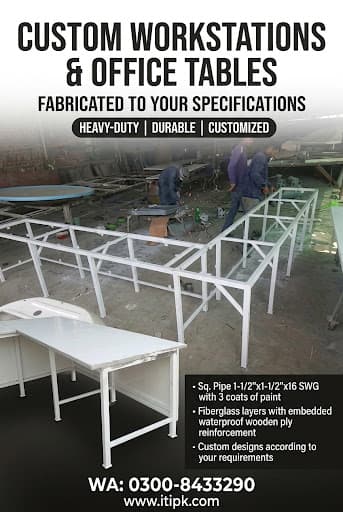


Fiberglass Furniture: Benefits, Durability, Maintenance & Custom Design
Learn why fiberglass furniture suits outdoor spaces, including durability, weather resistance, maintenance, custom designs, costs, plus practical buying advice. fiberglass furniture, outdoor fiberglass furniture, GRP furniture, fiberglass outdoor furniture, custom fiberglass furniture, weather-resistant outdoor furniture, commercial outdoor furniture. Outdoor furniture has to handle much more than everyday use. Sunlight, rain, humidity, dust, temperature changes, frequent cleaning, and constant movement can quickly damage materials that are not designed for exposed environments. This is why fiberglass furniture has become an increasingly practical choice for gardens, patios, hotels, restaurants, resorts, rooftops, commercial properties, and public spaces.
Fiberglass combines relatively low weight with excellent strength, corrosion resistance, and considerable design freedom. It can be manufactured in smooth contemporary forms, bold colors, custom dimensions, and shapes that would be difficult or expensive to produce in traditional wood or metal.
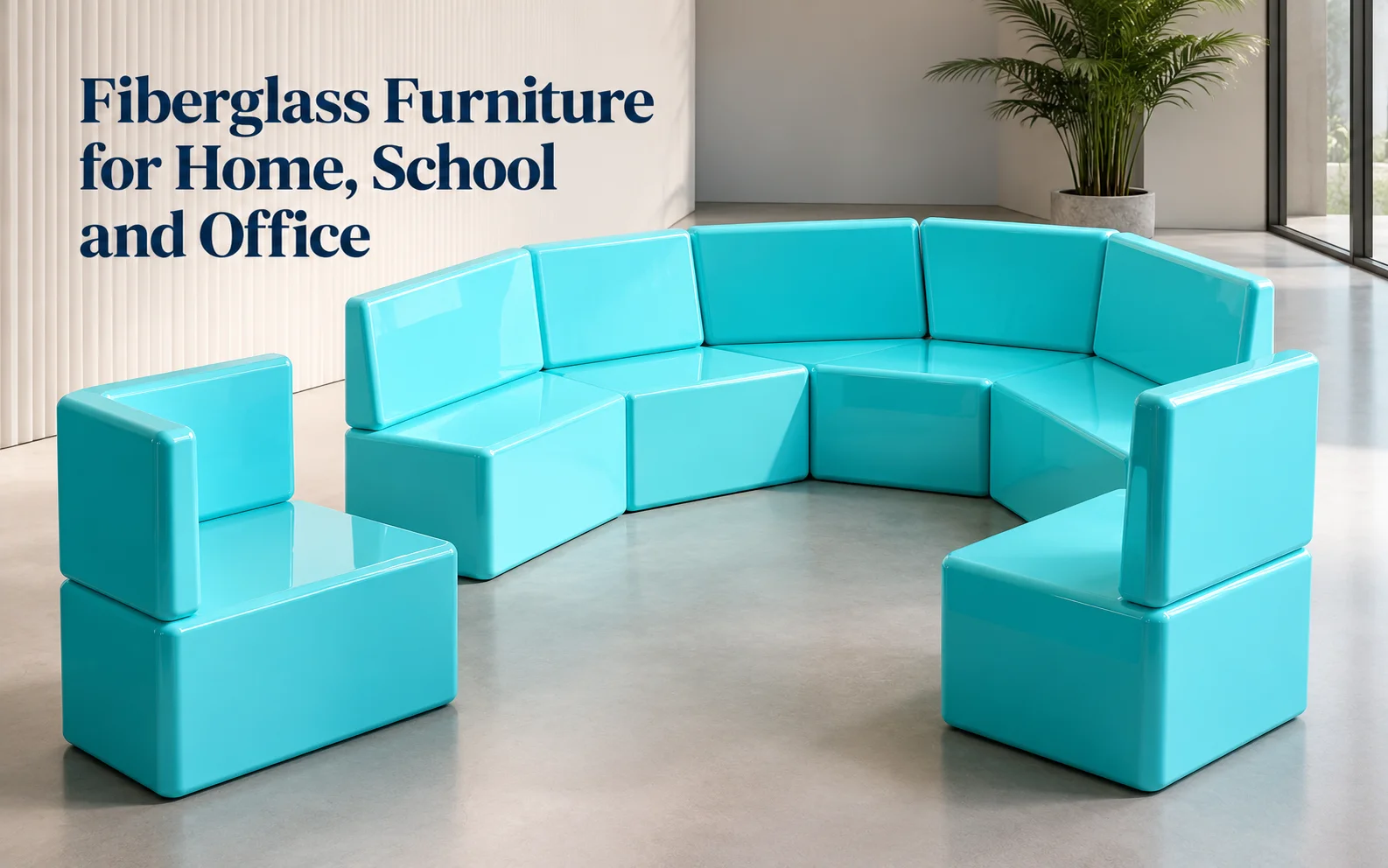
However, not every fiberglass product performs the same way. Resin quality, glass reinforcement, wall thickness, structural design, surface coating, workmanship, and UV protection all affect long-term performance.
This guide explains how fiberglass furniture works, its main advantages, maintenance requirements, outdoor durability, costs, customization possibilities, and how it compares with wood and metal.
What Is Fiberglass Furniture?
Fiberglass furniture is furniture manufactured using glass fibers combined with a polymer resin. The glass fibers provide reinforcement, while the resin binds the material together and creates the finished structure.
The material is commonly known as GRP, meaning Glass-Reinforced Plastic, so the terms fiberglass furniture and GRP furniture are often used interchangeably.
Depending on the manufacturing method and required performance, manufacturers may use different resins, reinforcement arrangements, molds, surface finishes, and internal supports.
Typical products include:
- Outdoor chairs and benches
- Garden tables
- Patio seating
- Planters with integrated seating
- Lounge furniture
- Restaurant tables and chairs
- Hotel and resort furniture
- Reception or waiting-area furniture
- Rooftop seating
- Poolside furniture
- Custom decorative structures
- Public-space benches
- Modular seating systems
Unlike furniture assembled from straight pieces of timber or metal tubing, fiberglass can be molded into flowing curves, rounded edges, geometric profiles, and other complex three-dimensional forms.
How GRP Fiberglass Furniture Is Made
A mold normally determines the basic size and shape of the finished product. Resin and glass reinforcement are applied or formed within the mold to produce the required structure.
After curing, the piece is removed, trimmed, finished, inspected, and prepared for installation or delivery.
Good manufacturing practice is important. A visually attractive product may still perform poorly if reinforcement is inadequate or if stress is concentrated around legs, mounting points, corners, or joints.
For outdoor applications, buyers should therefore evaluate construction quality rather than choosing only by appearance.
Top Benefits of Fiberglass Furniture
1. Strong Without Unnecessary Weight
One of the major advantages of fiberglass is its favorable strength-to-weight relationship.
Well-designed outdoor fiberglass furniture can provide substantial structural strength without requiring the heavy sections often associated with masonry, cast iron, or some traditional outdoor structures.
The lower weight can make furniture easier to:
- Reposition
- Transport
- Install
- Store
- Rearrange for events
- Move during cleaning
The exact weight depends on the product’s dimensions, laminate thickness, reinforcement, internal frame, and design.
2. Excellent Resistance to Corrosion
Fiberglass itself does not rust like ordinary carbon steel.
This is particularly valuable in gardens, pool areas, humid environments, restaurants, and other locations where furniture regularly comes into contact with moisture.
If metal fasteners, brackets, or internal frames are incorporated into the product, their corrosion resistance should still be considered separately. Stainless steel or appropriately protected hardware may be preferable in demanding locations.
3. Suitable for Outdoor Weather
Properly manufactured fiberglass outdoor furniture can perform well in rain, humidity, heat, and general outdoor exposure.
Its resistance to moisture is especially useful because fiberglass does not absorb water and swell in the same manner as poorly protected timber.
That does not mean every fiberglass product can remain outdoors indefinitely without aging. Continuous ultraviolet exposure can gradually affect certain resins and surface finishes. Outdoor products should therefore use suitable UV-resistant coatings, pigments, gel coats, or resin systems.
A properly specified surface system greatly improves long-term appearance.
4. Low Routine Maintenance
Another important benefit is relatively simple cleaning.
In most situations, ordinary dirt can be removed with:
- Clean water
- Mild soap or detergent
- A soft cloth or sponge
- A non-abrasive brush for textured areas
- A clean-water rinse
Unlike timber, fiberglass generally does not require routine sanding and re-varnishing.
Unlike unprotected steel, it does not require regular treatment simply to prevent rust.
This makes it an attractive option when property managers need weather-resistant outdoor furniture that can be maintained without complicated procedures.
5. Wide Choice of Colors and Finishes
Fiberglass provides considerable design flexibility.
Manufacturers can create products in many colors and surface appearances, depending on the selected manufacturing and finishing process.
Possible options include:
- Gloss surfaces
- Satin finishes
- Matte finishes
- Solid colors
- Neutral architectural tones
- Bright feature colors
- Smooth surfaces
- Textured surfaces
Color selection can help furniture complement landscaping, corporate branding, architectural themes, restaurants, hotels, schools, or public projects.
6. Freedom to Create Custom Shapes
One of the strongest reasons to specify custom fiberglass furniture is the ability to manufacture unconventional forms.
A designer may require a curved bench around a planter, circular lounge seating for a hotel courtyard, geometric furniture for a shopping center, or a particular table dimension for a restaurant terrace.
Fiberglass molding allows manufacturers to develop shapes that may require many separate components if produced in metal or timber.
How Durable Is Fiberglass Furniture for Outdoor Use?
Durability depends on much more than the word “fiberglass.”
A high-quality product designed for permanent outdoor use can provide long service, but its performance depends on several technical factors.
Important Factors Affecting Durability
Resin and Reinforcement Quality
The resin system and glass reinforcement should be appropriate for the expected load and environment.
More material does not automatically mean better engineering. Reinforcement needs to be positioned correctly so that the furniture can resist bending, impact, and repeated loading.
UV Protection
Strong sunlight can cause fading, discoloration, loss of gloss, or surface chalking in unsuitable materials over time.
Outdoor products should therefore have adequate UV-resistant finishing or pigmentation.
Structural Design
Seats, legs, bases, corners, mounting locations, and large flat sections should be designed to control stress and deflection.
Commercial furniture usually experiences more demanding use than furniture in a private garden.
Installation
Large or lightweight pieces may require anchoring where strong winds, vandalism, uneven ground, or heavy public use are concerns.
The manufacturer should be told where and how the furniture will be used before production.
Is Fiberglass Completely Maintenance-Free?
No material exposed outdoors is truly maintenance-free.
Fiberglass is better described as low-maintenance.
Periodic cleaning, inspection, and timely repair of accidental damage can help preserve its appearance and serviceability.
Fiberglass vs Wood vs Metal Outdoor Furniture
Each material has advantages. The best choice depends on the environment, design, budget, maintenance expectations, and desired appearance.
| Feature | Fiberglass | Wood | Metal |
|---|---|---|---|
| Corrosion resistance | Excellent | Does not rust, but can decay | Depends on metal and coating |
| Moisture resistance | Very good | Requires suitable protection | Varies considerably |
| Design flexibility | Excellent for molded forms | Good for traditional fabrication | Excellent for fabricated structures |
| Weight | Often relatively lightweight | Varies by species and design | Varies from light aluminum to heavy steel |
| Routine maintenance | Generally low | Often moderate to high outdoors | Low to moderate depending on finish |
| Custom colors | Wide selection | Usually stains or paint | Wide range of coatings |
| Complex curved shapes | Excellent | More difficult | Possible but fabrication-intensive |
| Natural appearance | Manufactured finish | Excellent natural character | Industrial or architectural appearance |
When Wood May Be Better
Wood remains an excellent choice when natural grain, warmth, and traditional craftsmanship are the main priorities.
High-quality outdoor timber can also be very durable when properly selected and maintained.
Its main disadvantage is that ongoing finishing and moisture management may be necessary.
When Metal May Be Better
Steel or aluminum may be preferable for very slender frames, heavily engineered structures, or designs where a metallic appearance is important.
Metal performance varies significantly. Aluminum does not rust in the same way as carbon steel, while ordinary steel generally requires protective coatings against corrosion.
When Fiberglass Has the Advantage
Fiberglass becomes particularly attractive when a project needs:
- Complex molded shapes
- Strong corrosion resistance
- Low routine maintenance
- Consistent colors
- Smooth modern forms
- Relatively lightweight construction
- Custom dimensions
- Outdoor exposure
For these reasons, no single material is universally “better.” Selection should be based on the actual application.
Best Applications and Use Cases for Fiberglass Furniture
Gardens and Residential Patios
Homeowners can use fiberglass chairs, benches, tables, stools, and planters to create practical outdoor seating without the maintenance associated with some traditional materials.
Modern designs work especially well around contemporary architecture and landscaped gardens.
Hotels and Resorts
Hotels need furniture that combines appearance with operational practicality.
Fiberglass can be useful for:
- Pool decks
- Courtyards
- Outdoor cafés
- Rooftops
- Gardens
- Waiting areas
- Resort landscaping
Customized colors and shapes can also support an individual property design concept.
Restaurants and Cafés
Restaurants frequently move and clean outdoor furniture.
Lightweight construction and washable surfaces can therefore be valuable operational advantages.
For professional use, commercial outdoor furniture should still be designed for the higher loads and repeated use expected in hospitality environments.
Shopping Centers and Commercial Properties
Fiberglass seating can be incorporated into architectural environments where conventional freestanding furniture may not provide the required visual effect.
Large curved benches, sculptural seating, planters, and branded installations are practical examples.
Parks and Public Spaces
GRP products can also be considered for schools, recreational developments, public waiting areas, parks, and community spaces.
For unattended areas, designers should consider anchoring, impact resistance, fire-performance requirements, vandal resistance, and accessibility.
Rooftops and Poolside Areas
Because fiberglass is corrosion-resistant and can be comparatively lightweight, it may be useful where furniture must be transported to upper levels or used around water.
Wind loading is important on exposed rooftops. Lightweight furniture may require secure placement or mechanical anchoring.
Custom Fiberglass Furniture: Colors, Sizes and Shapes
Customization is one of the main attractions of GRP construction.
A competent manufacturer can develop furniture according to architectural drawings, sketches, samples, dimensional requirements, or project-specific concepts.
Custom possibilities may include:
- Length, width and height
- Seat depth
- Backrest profiles
- Curved or straight designs
- Circular seating
- Integrated tables
- Custom colors
- Surface textures
- Branding areas
- Decorative patterns
- Integrated planters
- Fixed or freestanding installation
Why the Mold Matters
Custom molding requires development work before regular production begins.
The mold affects dimensional consistency, surface quality, repeatability, and production efficiency. For projects requiring many identical pieces, the initial mold cost can often be distributed across the production quantity.
For a single highly customized item, mold development can form a larger part of the total price.
Cost vs. Value of Fiberglass Outdoor Furniture
The purchase price should not be evaluated in isolation.
A cheaper chair that needs frequent refinishing or early replacement may have a higher long-term ownership cost than a more durable alternative.
When comparing products, consider:
- Initial purchase cost
- Installation requirements
- Cleaning requirements
- Repainting or refinishing
- Corrosion treatment
- Repairability
- Expected usage level
- Replacement frequency
- Transportation
- Custom tooling costs
For hotels, restaurants, institutions, and public facilities, labor spent maintaining furniture can be an important part of ownership cost.
Fiberglass can provide good value where durability, custom design, corrosion resistance, and reduced routine maintenance are priorities.
Tips for Choosing Fiberglass Furniture
1. Define the Environment
Tell the manufacturer whether the furniture will be used indoors, under a canopy, in full sunlight, around a swimming pool, on a rooftop, or in a public location.
Environmental exposure affects material and finish selection.
2. Explain the Expected Usage
A private garden chair and a public seating installation do not experience the same loading.
Specify whether the furniture is intended for residential, hospitality, institutional, or intensive commercial use.
3. Ask About UV Protection
For outdoor installations, confirm that the surface system is intended for sunlight exposure.
This is especially important in hot climates with strong year-round solar radiation.
4. Inspect Structural Details
Look beyond the surface finish.
Check:
- Stability
- Reinforced load areas
- Base design
- Edges
- Mounting points
- Hardware
- Seat support
- Surface consistency
Ask About Anchoring Where Necessary
Furniture installed on exposed rooftops, public walkways, landscaped sites, or other uncontrolled environments may need secure fixing.
5. Choose Practical Colors
Very dark surfaces exposed to direct sunlight can become noticeably hotter than lighter finishes.
Color should therefore be selected for both visual appearance and the intended environment.
6. Confirm Dimensions Before Custom Production
Custom dimensions should be reviewed carefully before mold or production work begins.
Important measurements may include seat height, seat depth, back height, overall width, table height, access routes, and available installation space.
7. Discuss Repair and After-Sales Support
Fiberglass can often be repaired when localized damage occurs, although the feasibility and finish quality depend on the extent and location of the damage.
Ask the manufacturer about recommended repair procedures before the furniture is placed into service.
Frequently Asked Questions About Fiberglass Furniture
Is Fiberglass Furniture Good for Outdoor Use?
Yes. Properly designed fiberglass furniture is well suited to many outdoor environments because it resists moisture and corrosion and can be manufactured with UV-resistant finishes.
Product quality and outdoor specification remain important.
Does Fiberglass Furniture Rust?
The fiberglass composite itself does not rust.
However, metal brackets, screws, frames, or fasteners incorporated into a product can corrode if unsuitable materials are used.
Can Fiberglass Furniture Stay Outside in the Rain?
Outdoor-grade fiberglass furniture can normally tolerate rain and wet conditions.
Drainage should still be considered so that water does not collect unnecessarily in seats, recesses, or internal cavities.
Does Fiberglass Fade in Sunlight?
Long-term UV exposure can affect some resins, pigments, and finishes. Proper outdoor coatings and UV-resistant materials help reduce fading and surface degradation.
Is Fiberglass Furniture Heavy?
It can be considerably lighter than some solid or heavily fabricated alternatives, but weight varies according to size, reinforcement, structural design, and internal components.
Large commercial products can still be substantial.
Can Fiberglass Furniture Be Made in Custom Colors?
Yes. One of its major advantages is the availability of many color and finish options.
Color matching should be discussed with the manufacturer because exact appearance can vary with pigments, coatings, surface texture, lighting, and production method.
Can Custom Shapes Be Manufactured?
Yes. Custom fiberglass furniture can be produced in curved, geometric, sculptural, modular, or project-specific designs using suitable molds.
Is GRP Furniture Fireproof?
Standard GRP furniture should not automatically be described as fireproof.
Fire behavior depends on the resin formulation, additives, laminate construction, surface materials, and applicable product specification. Where a project has specific fire-performance requirements, these should be identified before manufacturing.
How Should Fiberglass Furniture Be Cleaned?
For normal maintenance, use water, mild detergent, and a soft sponge or cloth. Avoid aggressive abrasives or strong chemicals unless the manufacturer confirms that they are compatible with the finish.
Is Fiberglass Suitable for Hotels and Restaurants?
Yes. Its moisture resistance, design flexibility, cleanable surfaces, and relatively low maintenance can make it suitable for hotels, cafés, restaurants, resorts, and other commercial environments.
Furniture intended for these locations should be designed specifically for commercial use.
Fiberglass furniture offers a useful combination of strength, corrosion resistance, relatively low weight, simple maintenance, and exceptional freedom of design. These characteristics make it suitable for gardens, patios, rooftops, restaurants, hotels, resorts, commercial developments, and many public outdoor environments.
Its greatest advantage is not simply that it is made from fiberglass. The real value comes from selecting the correct resin system, reinforcement, structural design, outdoor finish, dimensions, and manufacturing quality for the intended application.
Compared with wood, fiberglass can reduce routine refinishing requirements and provide greater freedom for molded forms. Compared with metal, it eliminates rust from the composite itself and can simplify the production of smooth, complex shapes. Wood and metal remain excellent materials for many projects, but fiberglass is particularly effective when customization, weather resistance, modern styling, and low maintenance are priorities.
For project-specific GRP fiberglass furniture, outdoor seating, custom shapes, colors, sizes, and commercial applications, buyers should work with a manufacturer that can understand both aesthetic requirements and practical operating conditions.
INDUSTRIAL TECHNO INTERNATIONAL manufactures fiberglass and GRP solutions for residential, commercial, hospitality, landscaping, and outdoor applications.
Location: Lahore, Pakistan
Phone: +92 300 8433290
Website: www.itipk.com