

Complete Guide to Fiberglass Planter Pots: Benefits, Selection, and Commercial Applications
Adding greenery to residential or commercial spaces transforms the environment, but selecting the right container is just as crucial as choosing the right plants. Traditional materials like terracotta, concrete, and ceramic often fail under outdoor weather conditions or prove too heavy for large-scale landscaping.
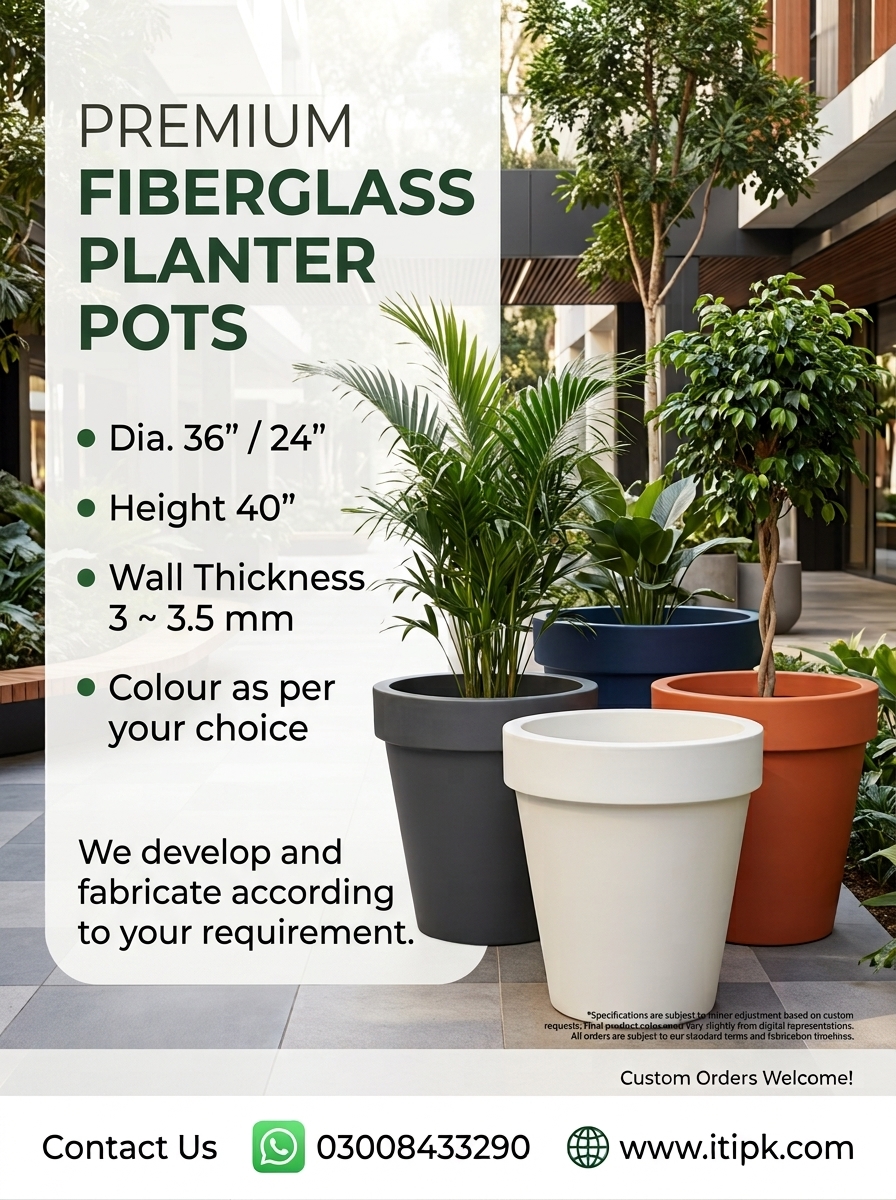
A modern, highly durable solution gaining widespread popularity across architectural and landscaping industries is the fiberglass planter pot. Engineered through advanced composite manufacturing, these containers offer an exceptional combination of lightweight handling, weather resistance, and long-lasting structural strength.
What Are Fiberglass Planter Pots?
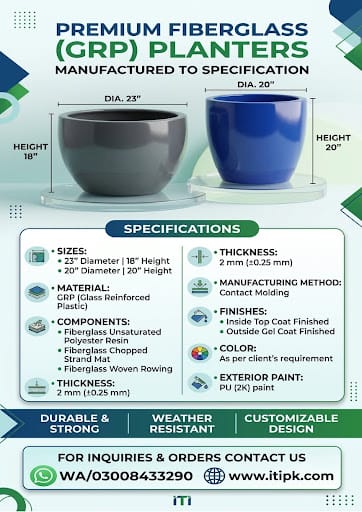
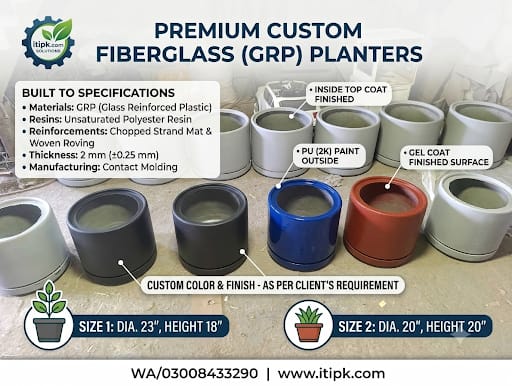
A fiberglass planter pot is a high-performance plant container manufactured from a composite material consisting of fine glass fibers embedded within a reinforced polymer resin matrix. During production, layers of fiberglass matting are molded into shape and saturated with specialized resins. Once cured, the structure forms a rigid, non-porous shell that undergoes precise surface finishing and industrial-grade coating.
Unlike standard plastic containers, fiberglass is a structural composite designed to withstand heavy soil loads, root growth pressure, and continuous exposure to harsh environmental elements without cracking, fading, or degrading over time.
Top Benefits of Fiberglass Planter Pots
Commercial property owners, interior designers, and professional landscapers consistently prefer fiberglass containers due to their distinct technical advantages:
* Exceptional Strength-to-Weight Ratio: Fiberglass offers the structural integrity of stone or concrete at a fraction of the weight, making installation and repositioning significantly easier.
* All-Weather Durability: Highly resistant to extreme heat, sub-zero frost, UV exposure, and moisture penetration, preventing seasonal cracking and material breakdown.
* Corrosion and Chemical Resistance: Will not rust, rot, or degrade when exposed to fertilizers, saline air, or acidic soil conditions.
* Design Versatility: Available in a vast array of shapes, sizes, textures, and custom color finishes ranging from matte slate to high-gloss metallic.
* Root Protection: Non-porous walls help maintain balanced moisture levels and protect root systems from sudden temperature fluctuations.
How Fiberglass Planter Pots Compare to Traditional Materials
To understand why composite containers excel in modern applications, it is helpful to evaluate them against conventional planting materials:
| Material | Weight | Durability | Weather Resistance | Maintenance |
|—|—|—|—|—|
| Fiberglass | Lightweight | Extremely High | Excellent (All-Weather) | Minimal |
| Terracotta / Clay | Medium | Low (Brittle) | Poor (Prone to Frost Damage) | Moderate |
| Concrete / Stone | Extremely Heavy | High | Good (Can Crack in Freezing) | High |
| Plastic / PVC | Lightweight | Low–Medium | Poor (UV Degradation) | Low |
| Metal / Steel | Heavy | Medium | Fair (Subject to Rust/Corrosion) | High |
Best Applications and Use Cases
Due to their structural flexibility and clean aesthetics, fiberglass planter pots are ideal for a wide range of settings:
1. Commercial Buildings and Corporate Offices
Large-format planters create defined walkways, elegant entrance displays, and natural room dividers in lobbies, conference centers, and executive plazas.
2. Rooftop Gardens and Balconies
Weight restrictions on elevated structures make heavy concrete planters impractical. Fiberglass provides the substantial appearance of stone without exceeding load-bearing limits.
3. Hotels, Restaurants, and Hospitality Spaces
Resilient against high foot traffic and daily wear, these planters enhance outdoor dining patios, pool…